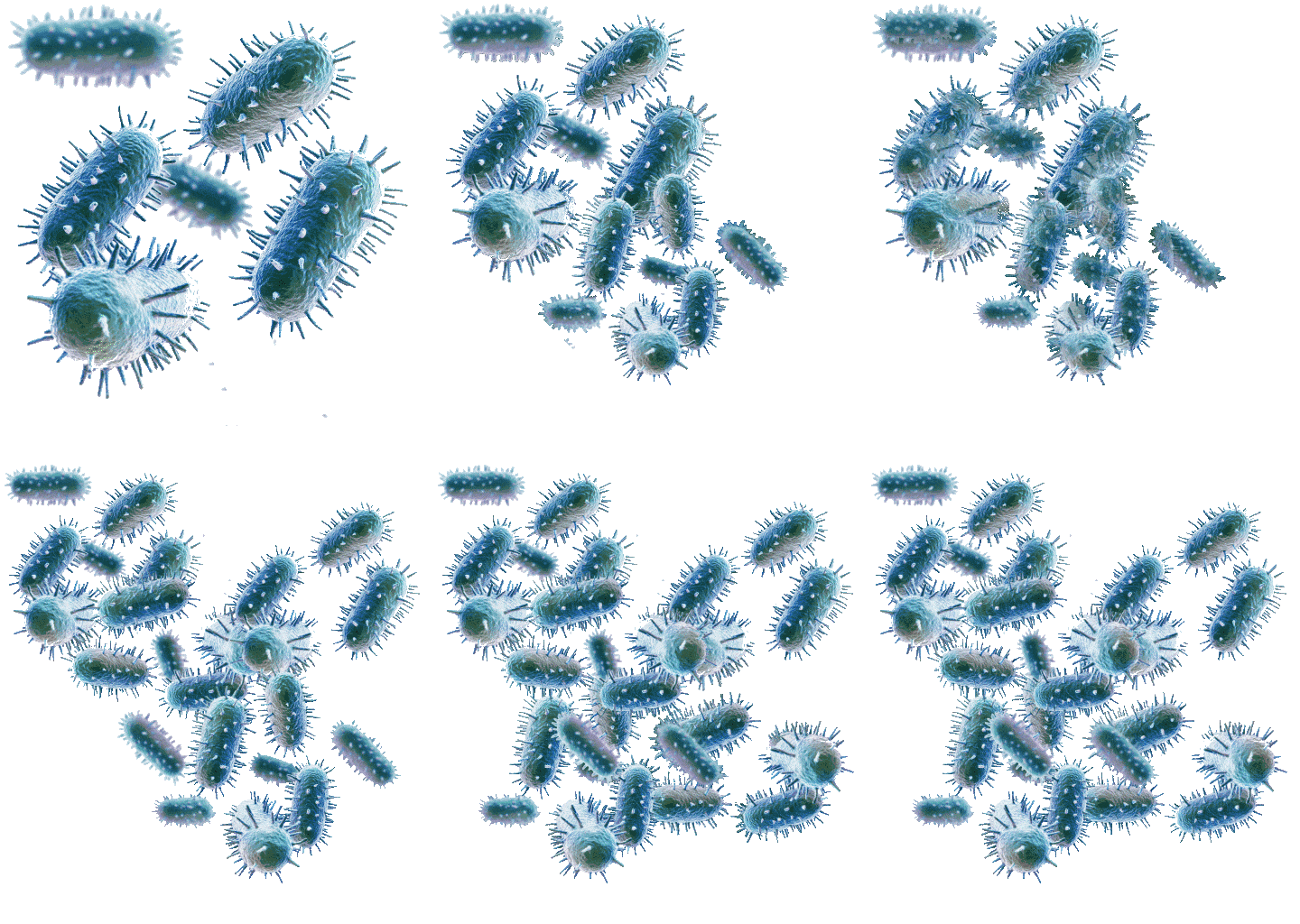
Bacteriophages, the natural predator of bacteria were discovered in Europe in the early 20th century.
Researchers quickly realised its potential in biomedical usage. However, the development was disrupted by the popularity of antibiotics during WW1 and WW2.
Today, phages are reclaiming the spotlight as precision tools against drug-resistant bacteria.
What are they?
Phages are naturally occurring viruses that specifically infect and destroy bacteria.
How do they work?
Phages attach to bacterial cells, inject their genetic material, and replicate inside until the bacteria burst, releasing new phages to continue the cycle.
The global crisis of antimicrobial resistance (AMR) demands innovative solutions
Antibiotics have saved countless lives, but overuse has led to the rise of resistant superbugs.
By 2050, AMR could cause 10 million deaths annually.
Why phage is the answer?
Antibiotics have saved countless lives but its overuse has led to the rise of resistant superbugs.
Phages evolve alongside bacteria, making it harder for resistance to develop.
- OUR SOLUTIONS -
Registration in process
Overview
Salmonella enteritica is an important pathogen that can cause Salmonellosis in human. The infection can happen without symptoms in chicken, and left untreated.
Data
Salmonella is undetectable on carcasses after spraying with Phagomune® S.
Salmonella is undetectable on carcasses after spraying with Phagomune® S.
A significant reduction in Salmonella load in the chicken gut was observed after one week of Phagomune® S treatment.
Salmonella was undetectable in DOC samples after 18 hours of treatment using transportation gel supplemented with Phagomune® S.
Product
Phage Cocktail Against S. enteritica
Carcass spraying water: add 10 ml of solution to each liter of water and rinse at least three times.
Chicken drinking water: add 1 ml of solution to each liter of water.
Day-old chick (DOC) transportation gel: add 1 ml of solution to every 100 grams of gel before dissolving the gel in 2 liters of water.
Registration in process
Salmonella enteriticais an important pathogen that can cause Salmonellosis in human. The infection can happen without symptoms in chicken, and left untreated.
Salmonella is undetectable on carcasses after spraying with Phagomune® S.
Salmonella is undetectable on carcasses after spraying with Phagomune® S.
A significant reduction in Salmonella load in the chicken gut was observed after one week of Phagomune® S treatment.
Salmonella was undetectable in DOC samples after 18 hours of treatment using transportation gel supplemented with Phagomune® S.
Phage cocktail against S. enteritica
Carcass spraying water: add 10 ml of solution to each liter of water and rinse at least three times.
Chicken drinking water: add 1 ml of solution to each liter of water.
Day-old chick (DOC) transportation gel: add 1 ml of solution to every 100 grams of gel before dissolving the gel in 2 liters of water.
Registration in process
Overview
Vibrio parahaemolyticus is an important pathogen in shrimp industry. It can cause vibriosis in the animal, even health problem in humans who consume infected seafood.
Data
Vibrio parahaemolyticus load significantly decreased after 24 hours of Phagomune® V treatment.
Product
Phage Cocktail Against V. Parahaemolyticus
Shrimp larvae packaging bags: add 1 ml of solution for every 2 liters of water.
Shrimp maintenance water: add 1 ml of solution for every 10 liters of waters.
Registration in process
Vibrio parahaemolyticus is an important pathogen in shrimp industry. It can cause vibriosis in the animal, even health problem in humans who consume infected seafood.
Vibrio parahaemolyticus load significantly decreased after 24 hours of Phagomune® V treatment.
Phage Cocktail Against V. Parahaemolyticus
Shrimp larvae packaging bags: add 1 ml of solution for every 2 liters of water.
Shrimp maintenance water: add 1 ml of solution for every 10 liters of waters.
Registration in process
Salmonella enteritica is an important pathogen that can cause Salmonellosis in human. The infection can happen without symptoms in chicken, and left untreated.
Vibrio parahaemolyticus is an important pathogen in shrimp industry. It can cause vibriosis in the animal, even health problem in humans who consume infected seafood.